LANGUAGE


Please select the language that suits you
LANGUAGE 
Quality Control at the Factory: What an ODM Buyer Can Actually Inspect
[ Time:2026-11-21 View:9次 ]
Quality Control at the Factory: What an ODM Buyer Can Actually Inspect
A machine can look impressive in a showroom and still disappoint once it reaches a customer's jobsite. For an ODM buyer, this is one of the biggest risks of sourcing construction and agricultural equipment overseas. A polished exterior and a competitive price are not enough to establish manufacturing quality.
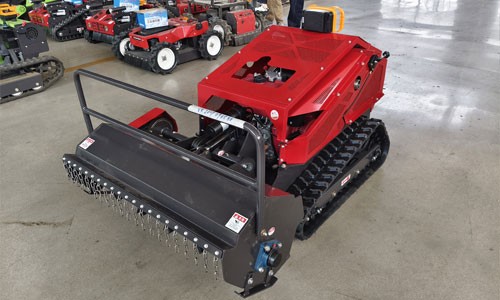
The eal picture becomes clearer when you walk through the factory.
A factory inspection allows buyers to see how machines are built, how components are assembled, and whether the manufacturer can maintain consistent quality across an entire order. This matters when sourcing equipment such as mini excavators, skid steer loaders, road rollers, and remote-controlled lawn mowers.
The Showroom Is Not the Factory
Most manufacturers know how to present finished products. Machines are cleaned, painted, and prepared for demonstrations. However, I would rather see a machine halfway through assembly than spend another twenty minutes looking at a polished showroom model.
Unfinished machines reveal details that are easy to overlook after assembly. Check how hydraulic hoses are routed, whether electrical wiring is protected, and how structural components are connected.
On a mini excavator, for example, the boom, arm, and bucket may look perfectly aligned, but the quality of their mounting points, welding, and hydraulic connections has a much greater influence on long-term performance.
A factory inspection should begin with curiosity, not simply a checklist.
Look Beyond the Model Number
One issue that deserves particular attention in ODM purchasing is configuration consistency.
Two machines carrying the same model designation may have different engines, hydraulic components, control systems, or attachment configurations. Buyers should never assume that a model name guarantees a specific setup.
During an inspection, check engine nameplates, hydraulic pump and motor markings, electrical components, and other key specifications. Compare the actual machine with the approved configuration sheet.
For example, a European distributor may have specific requirements for engine emissions compliance and documentation, while buyers in other markets may prioritise maintenance convenience and local spare parts availability.
If an order includes several machine versions, ask how the factory identifies and separates different configurations during production. A simple specification mix-up can become an expensive problem after delivery.
Workmanship Matters More Than Appearance
Paint quality is easy to notice, but structural details deserve more attention.
Examine welding around excavator booms, loader arms, chassis frames, and attachment brackets. Look for inconsistent welds, visible cracks, incomplete joints, and poor surface preparation.
Follow the hydraulic lines as well. Are hoses positioned away from sharp edges and moving components? Are connections secure?
Different machines also have different inspection priorities. On a mini road roller, examine the drum, vibration mechanism, and hydraulic connections. On a remote-controlled lawn mower, check the cutting deck, blade assembly, protective covers, and control response.
These details affect equipment reliability, maintenance costs, and the customer experience.
Good-looking workmanship is important, but repeatable workmanship is what buyers should really look for.
A Successful Test Run Is Not Enough
Never approve an ODM machine based entirely on photographs or a static inspection.
Ask the factory to operate the equipment under normal working conditions. Listen to the engine during startup and idle. Watch for abnormal vibration, hydraulic leakage, unusual noises, or inconsistent movement.
A mini excavator should demonstrate smooth boom, arm, bucket, and travel operations. A skid steer loader should respond consistently during lifting, lowering, and steering. Road rollers and remote-controlled mowers should also demonstrate their essential operating and safety functions.
However, one successful demonstration does not prove that every machine in the shipment will perform equally well.
Ask whether individual test results are recorded and how defective units are handled. A manufacturer that can provide inspection reports offers stronger evidence of quality than one that simply claims every machine is tested.
Customisation Is Only Valuable When It Is Consistent
Customisation is one of the main reasons buyers choose ODM manufacturing. Engine options, company branding, paint colours, attachments, and control configurations allow distributors to adapt products to their markets.
But every additional requirement creates another opportunity for production mistakes.
Imagine ordering several mini excavators with different engine configurations and branding requirements. If these details exist only in email conversations, workers on the production floor may not have the correct information.
Approved drawings, configuration sheets, and sample references should therefore be available during production.
The real question is not whether a factory can customise a machine. It is whether it can reproduce that customised version accurately, order after order.
Before the Machines Leave the Factory
A final inspection should be treated as a commercial safeguard, not a formality.
Before production begins, agree on critical specifications, testing requirements, workmanship standards, and packaging expectations. For larger orders, an independent third-party inspection can provide additional assurance.
Also check spare parts, accessories, operating manuals, serial numbers, and shipping protection. A machine that passes its functional test but arrives with damaged components or missing accessories is still a quality problem.
If a unit fails inspection, corrective actions and re-inspection arrangements should already be agreed upon.
Quality Is More Than a Checklist
For an ODM buyer, the most valuable result of a factory inspection is a clearer understanding of how the manufacturer works.
A dependable production partner should be able to demonstrate its assembly standards, explain its component choices, provide meaningful testing records, and control customised orders.
Whether sourcing mini excavators, skid steer loaders, road rollers, or specialised mowers, the principle remains the same: do not judge a manufacturer by its best-looking machine. Judge it by its ability to produce the same quality consistently.
That is what separates a short-term supplier from a dependable ODM manufacturing partner.


Phone